

The itinerary: the route takes you through San José and toward the south coast, before leading you back into the open countryside.
What you'll get: beautiful villages, stunning coastline and cliff-top views, turquoise-coloured waters, historical points of interest, winding country roads, and pit stops for refreshment.
Essential take-along items: drinks, snacks, a good camera, beach gear, a good selection of tunes, cash or card for refreshments, sunscreen, and a map app to help you navigate your way.
The route
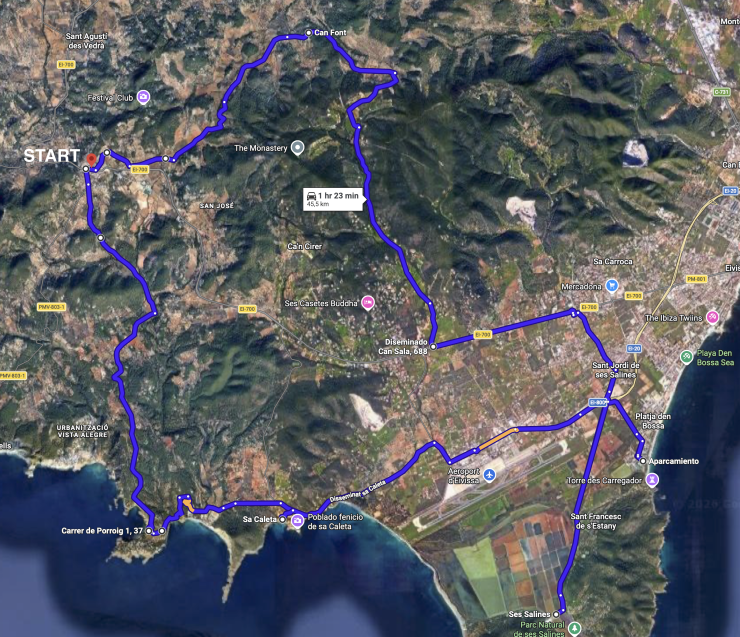
Starting in the village of San José, we drove along the south coast, from the tiny cove of Porroig, passing by Cala Jondal, Sa Caleta, and finally on to Playa d’en Bossa. We then completed the journey with a drive back through the beautiful country roads to San José.
Click this link to add the map to your phone
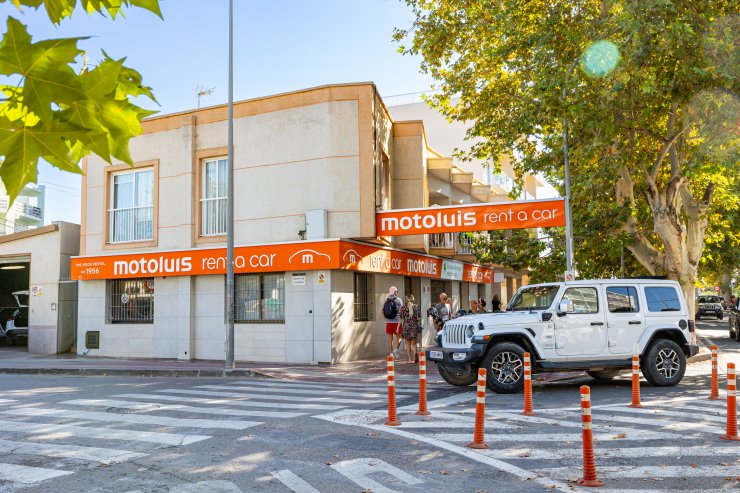
We began our journey with perhaps the most important part of the trip: picking up our wheels for the day. Moto Luis has long been regarded as one of the island's most trusted car hire companies, so we made their San Antonio office our first stop.
The collection process was friendly and seamless, and it got even better when we were handed the keys to our stunning Jeep Wrangler. Chunky, yet comfortable, and more than capable of tackling Ibiza’s varied terrain, it was the ideal choice for a day spent exploring the island. With the roof down and the open road ahead, our adventure was ready to commence.
First stop: breakfast
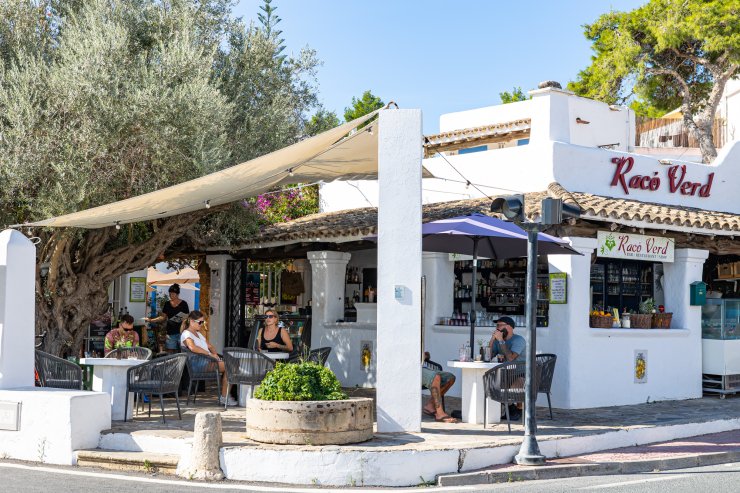
We didn’t want rumbling stomachs distracting us from our scenic drive ahead, so our first stop was a spicy Mexican breakfast at the charming restaurant Racó Verd in San José village. Positioned on the street front, the terrace offers lovely views of the church.
San José is a small, charming village that still retains a traditional feel. If you are exploring on a Saturday, it’s worth stopping off for the ecological market during the summer season.
Towards the coast
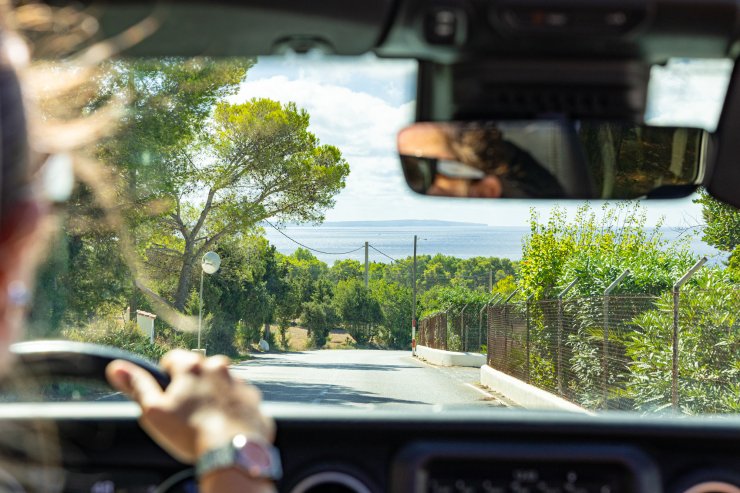
Leaving San José behind, we were on the road, heading south towards our first seafront stop, the secluded cove of Porroig. The small village road soon opened up, with green hills framing our route towards the coast. Before long, we followed the turn towards Sa Caleta, which immediately drew us onto a winding road, lined with tall rushes and small stone walls.
The roads and passes are much narrower on this stretch; make sure to look out for cyclists, who also enjoy this trail.
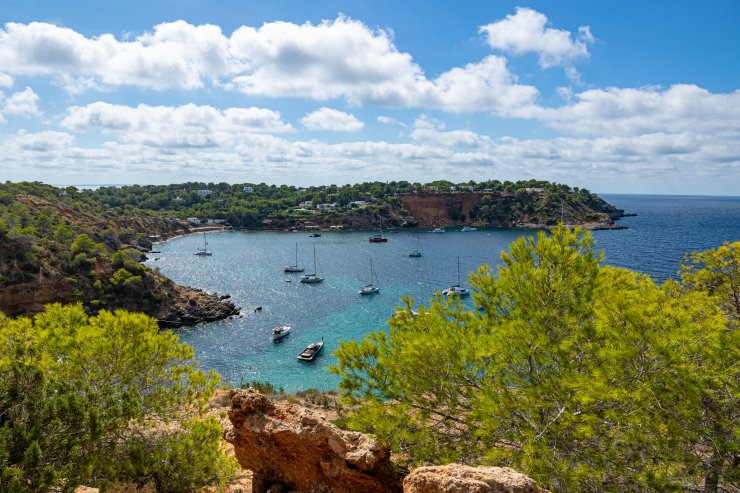
Stopping off to catch an elevated view of our destination, the panoramic scene before us was stunning. Dotted with impressive villas, the green and grey cliffside curves into the shimmering turquoise bay of Porroig. This is no ordinary beach, but a sheltered cove, lined with rustic fishermen's huts. It's a place that those in the know (that includes you now!) come for a taste of the real Ibiza.
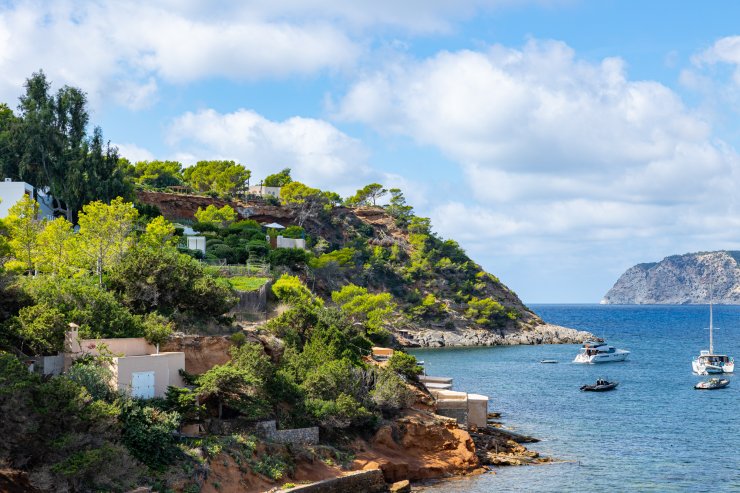
Jumping out of the car, the most spectacular scene was before us. On the left, the hillside resembled a peaceful Japanese garden, while on the right, the larger, green hillside held the small white houses of Es Torrent dotted amongst it.
Be aware that parking is limited here, and the road here is really only for those with fully comprehensive car-hire insurance, but it is an adventure, nonetheless.
As stunning as this was, we had another up our sleeve. A short but bumpy ride towards Cala Jondal took us past the tiny cove of Cala Es Xarco and the family-run restaurant Es Xarcu. Again, finding a parking spot could be tricky, but if you’re looking for an authentic seafront setting, this could be it.
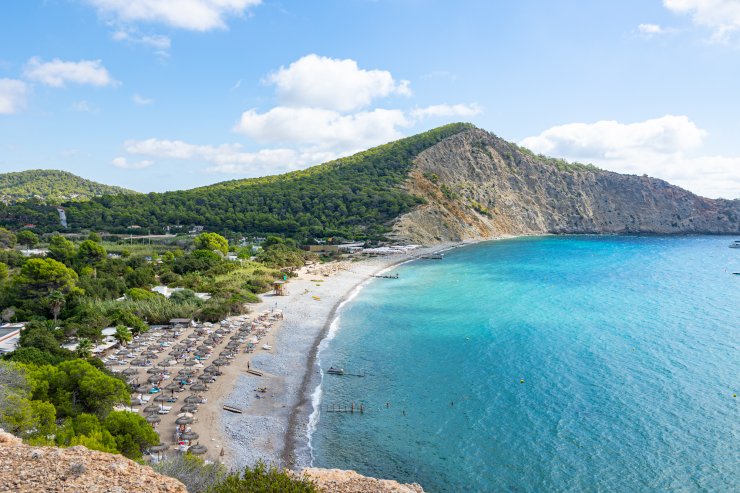
A few moments' drive up the hill, before you take a left bend, you’ll spot a small space to pull in. It can fit only two to three cars, but if there's room, we recommend taking the opportunity to park. From here, walk up the gravel hill to its peak, and you will soon face the most breathtaking view.
Expanding before you stretches the glistening Mediterranean, with Cala Es Xarco to the right and the long, golden sands of Cala Jondal (pictured above), with its collection of beach restaurants, to the left.
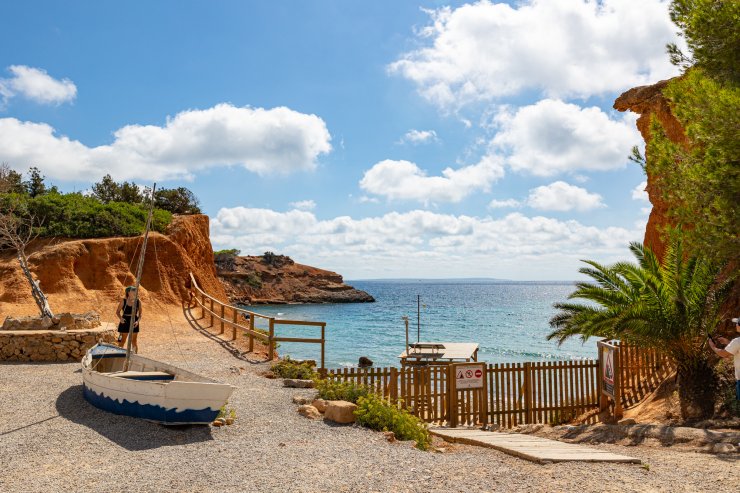
The red cliffs of Es Bol Nou (Sa Caleta) were our next destination. For safety reasons, the beach is currently closed; however, there’s still good reason to visit this spot. Firstly, the pretty restaurant of Sa Caleta is renowned for its Café Caleta (a brandy-based, sweet coffee), which could be a nice refreshment before exploring the historic settlement and former military barracks just up the hill.
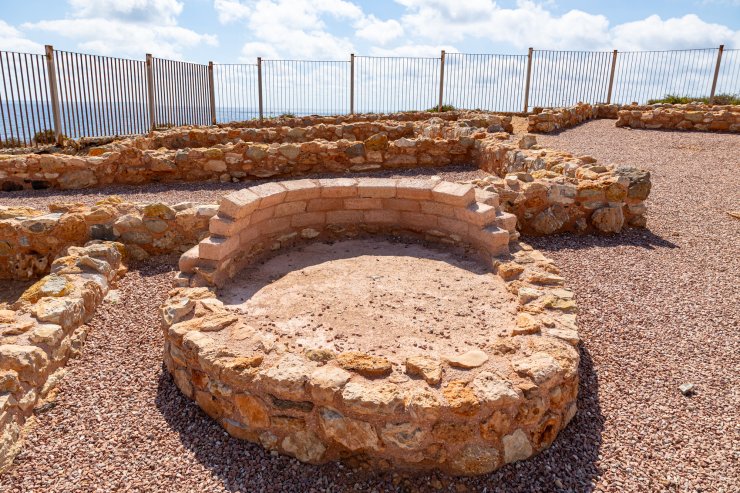
An important part of Ibiza's history, Sa Caleta is the island's earliest known human settlement. The site features an information centre and open grounds where you can take your time to meander and explore the various exhibits.
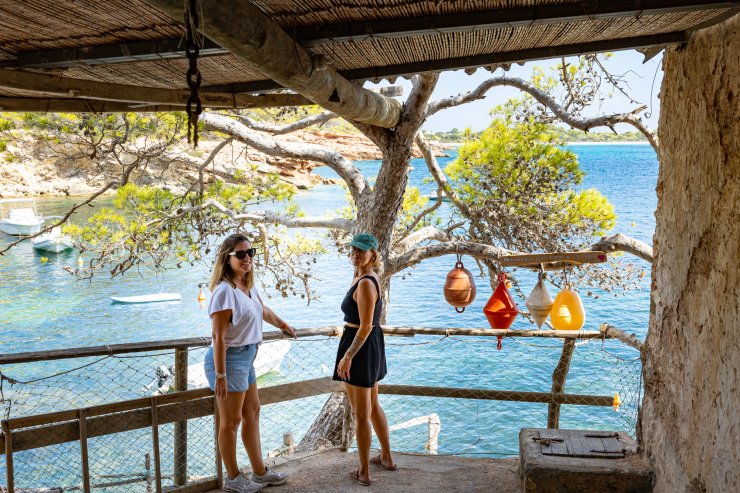
Whilst you’re here, walk down towards the fishermen's huts, which line the small bay to the left, where we recommend enjoying a dip in this perfectly picturesque setting.
Our Phoenician trail then continued as we headed towards the island’s southernmost tip and into Ses Salines National Park. Many would have heard of the vibrant and rather beautiful sandy shores within this protected area, but the Ses Salines salt flats which line the route are just as majestic.
You will know as you begin to approach the area; the smell will certainly give it away.
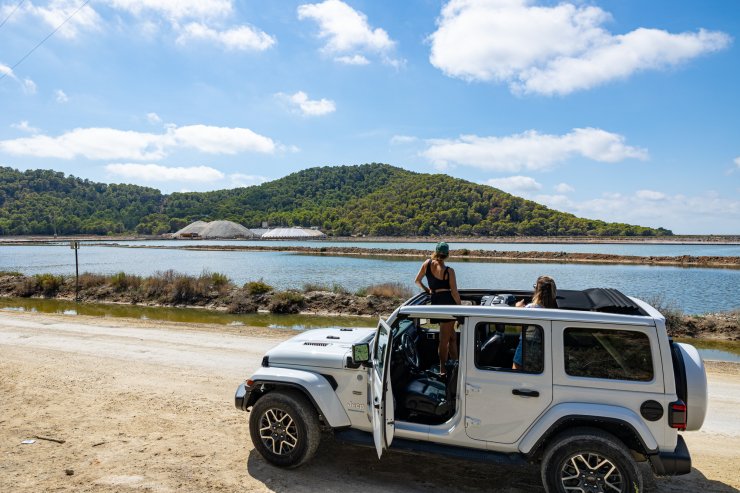
Salt production dates back to Phoenician times (around the 7th Century B.C.) and remains an important island export today. We were lucky enough to spot the collection in process - a dumper truck making its rounds. If you’re extra lucky, you may spot more pink-hued visitors, as flamingos feed in these shallow pools on their annual migration route.
You could stop off for a quick dip at the beaches of Es Cavallet and Las Salinas; however, we had one more historical island artefact to visit.
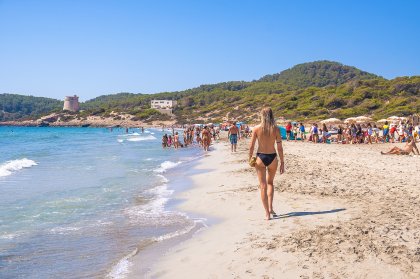
A few minutes’ drive on the main road and the vibrant resort of Playa d’en Bossa comes into view. The resort is home to the longest beach on the island and is one of the island's liveliest resorts.
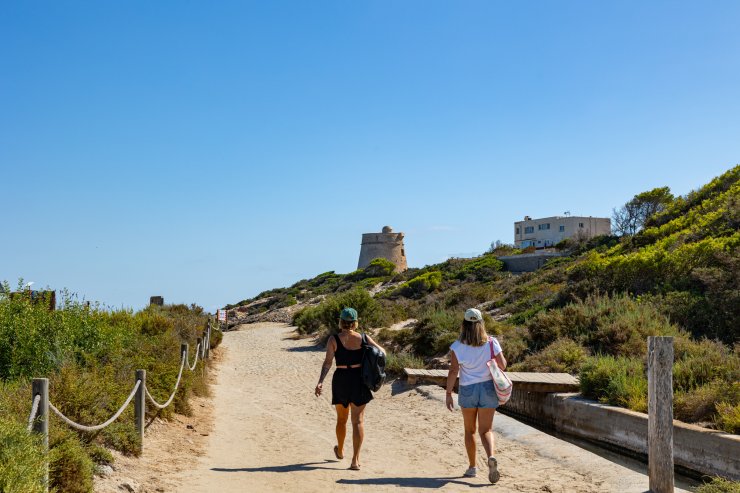
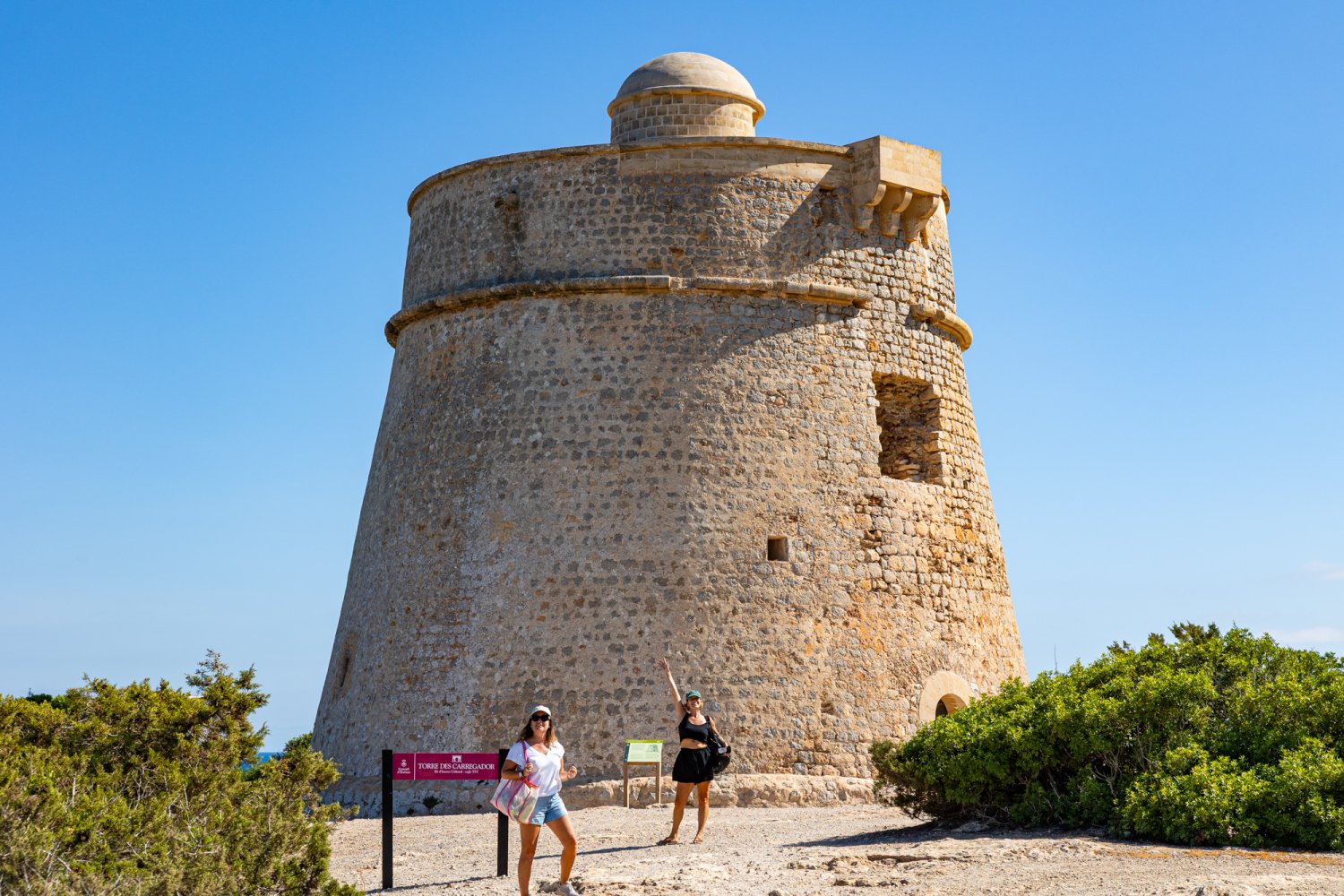
The final chapter in our expedition took us to the far south end, where a more relaxed energy prevails. A dip in the crystal-clear waters will call, but we urge you to take a short walk up the rocky hill to the 16th-century Torre de Sa Sal Rossa watchtower first.
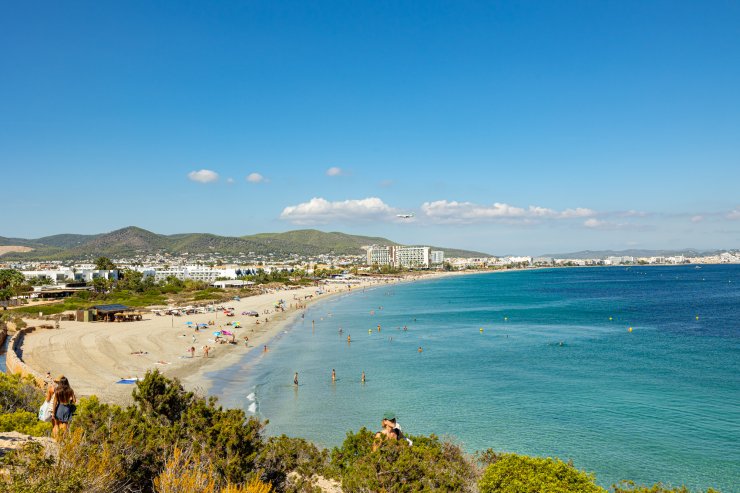
The reward for this last bit of effort is an incredible view of this 3 km-long, golden sandy stretch below, and the bustling offerings that make this resort so popular with holidaymakers. Afterwards, you can cool off with a dip in the beautifully clear sea and enjoy extra refreshments from its newest beach chiringuito, Cala Escondida Ibiza (spotted on the far left of the photo).
Although it can get busy in the summer months, you’ll find lots of free parking near this less-frequented end of the beach.
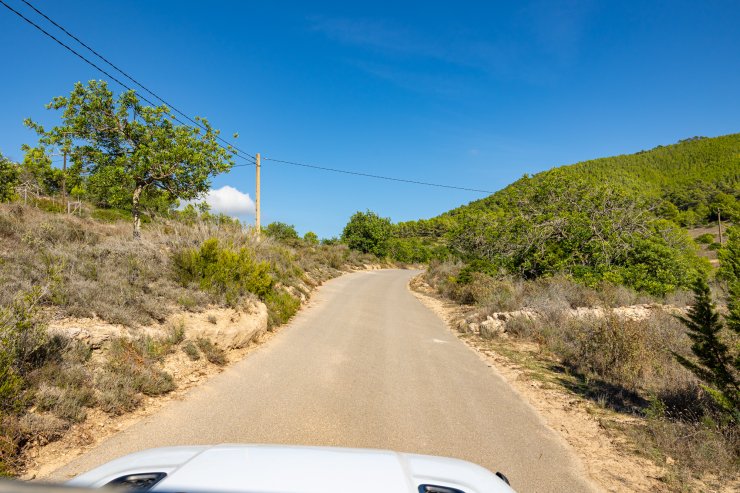
Of course you could easily double back on yourself and follow the main road back toward San Antonio again, but we’d like to suggest a more scenic journey home.
Leaving the main San José road, we drove up on the San Jorge country road. As we climbed, Mediterranean pine trees stood tall on the hillside to the right, shielding the sun, whilst on the left glimpses of rocky beds gave way to emerging country fields.
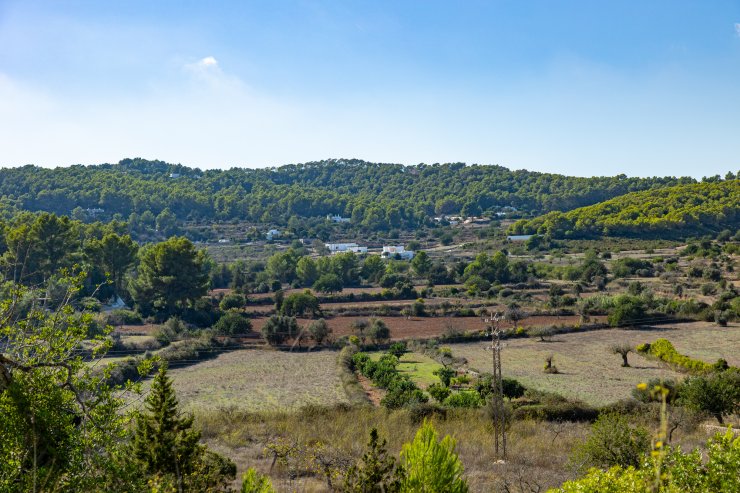
This is a drive to enjoy at a slower pace, not only for safety on these country roads but also to give you time to take in the beautiful scenery that surrounds you. From fields filled with olive trees to open land dotted with small fincas and grazing sheep, this drive is an opportunity to see another side of Ibiza, away from the celebrated beachfront experience.
Why not explore more of Ibiza and follow our Northwest, Southwest, and Northeast on the road guides.