To read part two of our conversation with DJ Paulette, please visit this page.
Documenting history
You talked about not realising the cultural footprint of the Haçienda at the time. You've published a written memoir and Peter Hook’s How Not To Run A Club is one of the most notorious books in dance music literature.
How important is it that we continue documenting dance music culture in the social media age? That we have this physical record, as well as a digital one?
“This is how the legend becomes bigger and more widespread.
Lots of people have written books on The Haçienda, but few are written by women. I'm not mentioned anywhere in Peter's book, so I wrote my own. Mike Pickering's just published his and Graeme's writing his now. You can see the footprint getting bigger."
"Adult literacy and independent thought are a big concern. It's not enough looking at filtered pictures with limited character-mood blasts. In order to understand, to question, to debate, we need to be well-informed.
We need history to be fully representative and we need to be able to challenge it. When we spot the gaps and inconsistencies, there's room for somebody else to write from that angle of the story. That’s exactly where my book fits in.
The more people write about it, the more we know about it."
"Every angle is relevant. I brought in the black, female experience, the queer side of it, the northern perspective of the music industry that people told me was irrelevant. I saw the value of looking at it all from a different corner of the room.
That's why it's important for us to continue to document the history from whichever part of the culture you're standing in. Whether you're behind the decks, in front of the decks, managing the club, fly posting, glass collecting, whatever.
History is as recent as yesterday."
"Go back to 2015 or 2010, think where you were then and what was happening. We are living history every day. I think if we can make people realise that they too are part of history, society becomes more inclusive.
It stops people thinking that history stops with the Tudors, Henry VIII and the Tower of London. Our present is tomorrow's history.
I encourage everyone to save their flyers, look after their clothes, take photos, write journals and find a way to archive it all safely, because at some point in five, ten, fifteen, thirty years down the line, they will become the documents that support the history that people want to commission, to inform and curate exhibitions about.
That's the beauty of making history. You can write that story."
"It's essential to keep documenting it and to take it seriously. I would encourage any clubber and any DJ to do the same thing.
Other countries like France and Germany have given electronic music official cultural heritage status. While our governments might think that dance music isn't important, it's a billion dollar industry that contributes to the global economy.”
What would you say to encourage people to come to The Haçienda night?
“I would say come and enjoy a night out in the company of legends just for the fun of going out.
Come and experience the prestigious Manchester Camerata orchestra playing House music on a legendary Ibiza dancefloor, which is a phenomenal experience, then witness a line-up of dreams play. Everyone on the bill is a pioneer, icon, legend.
We created the club and its scene from the bottom up and we're still breaking ground to this day."
"If you missed raving in the glory days and are curious to find out what this is all about, another reason to come with an open-mind and be curious. Most importantly, come to enjoy the past, present and future in one club in one night.
Find your new tribe, listen to a world class orchestra play House classics and dance like no one’s watching to some great DJs. It's fun, not fucking brain surgery! We're evolving year on year and long may it continue."
The four pillars of House music
We started off political, so it feels appropriate to loop back and bookend our conversation in the same ballpark.
Looking back to when you first-started out to now, have things improved in the industry surrounding misogyny, homophobia and racism? Or are we in danger of relapsing?
“We are in a better position in lots of ways.
I can see lots more faces like mine behind the decks. But when I say that, we’re still the minority. Line-ups are not balanced. We're nowhere near taking over and we're not getting paid, promoted or elevated as much or as highly as our male counterparts.
It's not just about representation. It's about how we are treated, respected or, equally, disrespected, but that's your misogyny writ large.
When women walk in, we're carrying more weight. Before you even play a tune, people look at you critically. You're judged if you miss a beat or fumble a mix. You’re not only judged on your track selection, but on what you're wearing. Guys just walk out and play, period.”
We circle back to Ella Knight’s recent altercation.
"It's very disturbing. While that's never happened to me, it has happened to someone like me. I don't know why it happened, but it needs to stop. Anyone that is so entitled and lacking in basic etiquette needs to get the hell out. We don't want you here.
We don't need that attitude. It would be nice to say, ‘yeah it's great and we've really moved forward’, but there are pockets of ugliness festering - against queer DJs, against trans DJs and against female DJs. The list goes on.
There are times when I walk into a booth and think, ‘holy shit, I'm the only black face here - what if people don’t want me here’? Thankfully, it's never happened, but the current climate puts you on edge enough to think it might."
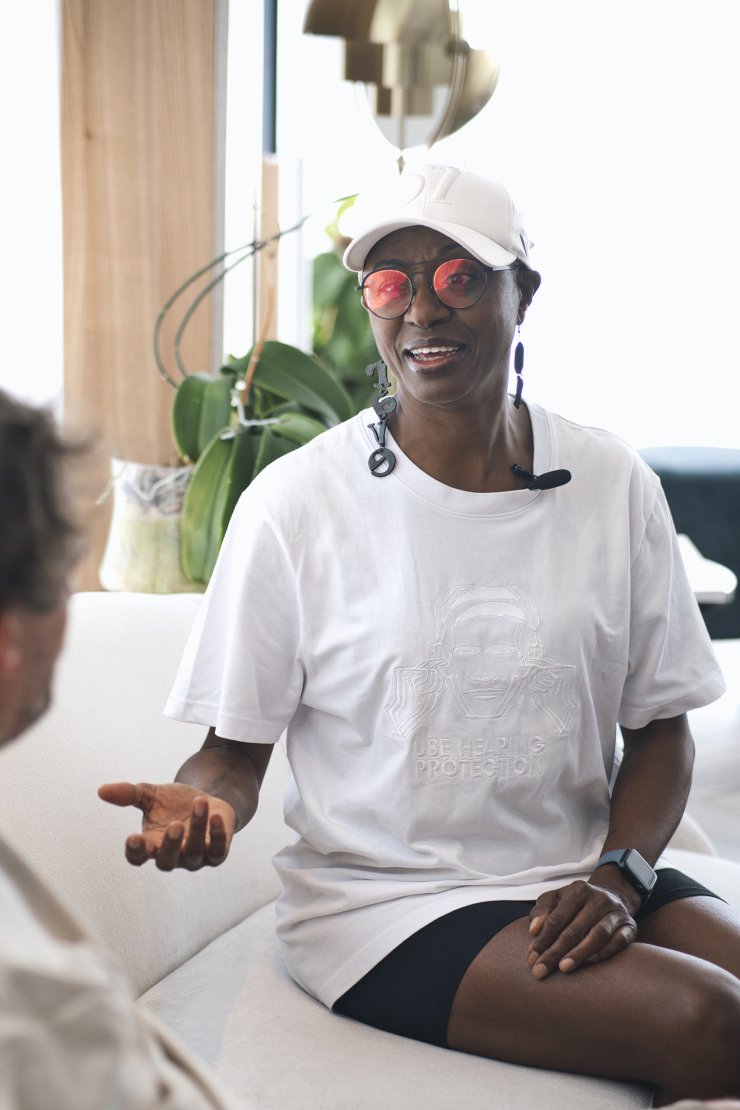
"I admit to having been nervous about DJing on the weekends when the anti-immigration riots were taking place.
The parties I’ve played at have been very 'One Love', so I am in a blessed and privileged position and can be positive. In the main, people are having a good time and the scene has evolved for the better, but we do need a health check.
It's reassuring that some important players are supportive and making a clear stand. Fatboy Slim did something in Brighton and House Against Hate did the counter-demonstration in Trafalgar Square. Still, more should be done."
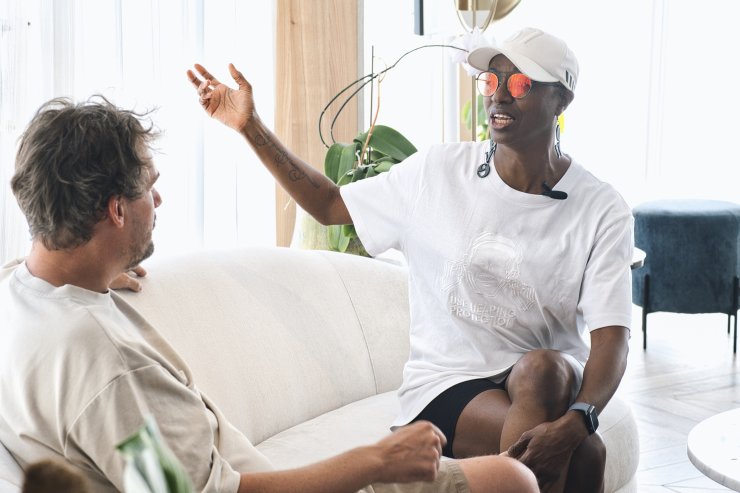
"We do need to be reminded that just because we're having a good time, it doesn't mean that everybody is. We must be aware and pay close attention. We must be engaged and be active allies where and when necessary."
Remind us of those four pillars of House music again.
"Peace, love, unity and respect: that's all anybody needs to know and then they should act accordingly. They don't have to read war and peace, they don't have to read Encyclopedia Britannica to figure it out. They don't have to find the meaning of life.
It's just the simple meaning of House music: peace, love, unity and respect - that is all."
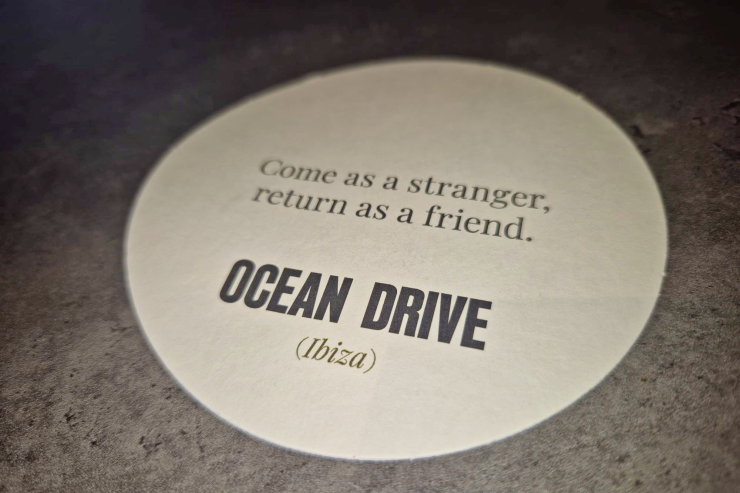
Before she gets up to leave, Paulette clocks something on the coffee tables and smiles. It’s a coaster. She picks it up and hands it to me. "Come as a stranger, return as a friend." The feeling is mutual. Roll on 19 September for The Haçienda. It must be built.
DJ Paulette plays at Amnesia on Saturday 19 September alongside David Morales, Inner City (live), Todd Terry, Graeme Park, Mike Pickering, Alison Limerick and Haçienda Classical (live).
Both general admission and balcony-access tickets for FAC51: The Haçienda are on sale now and available to buy below or via our party calendar.
PHOTOGRAPHY | by La Skimal