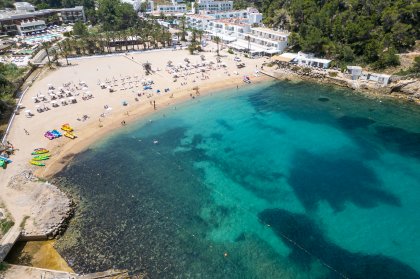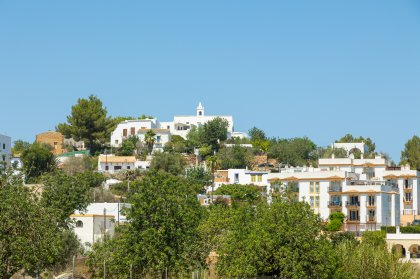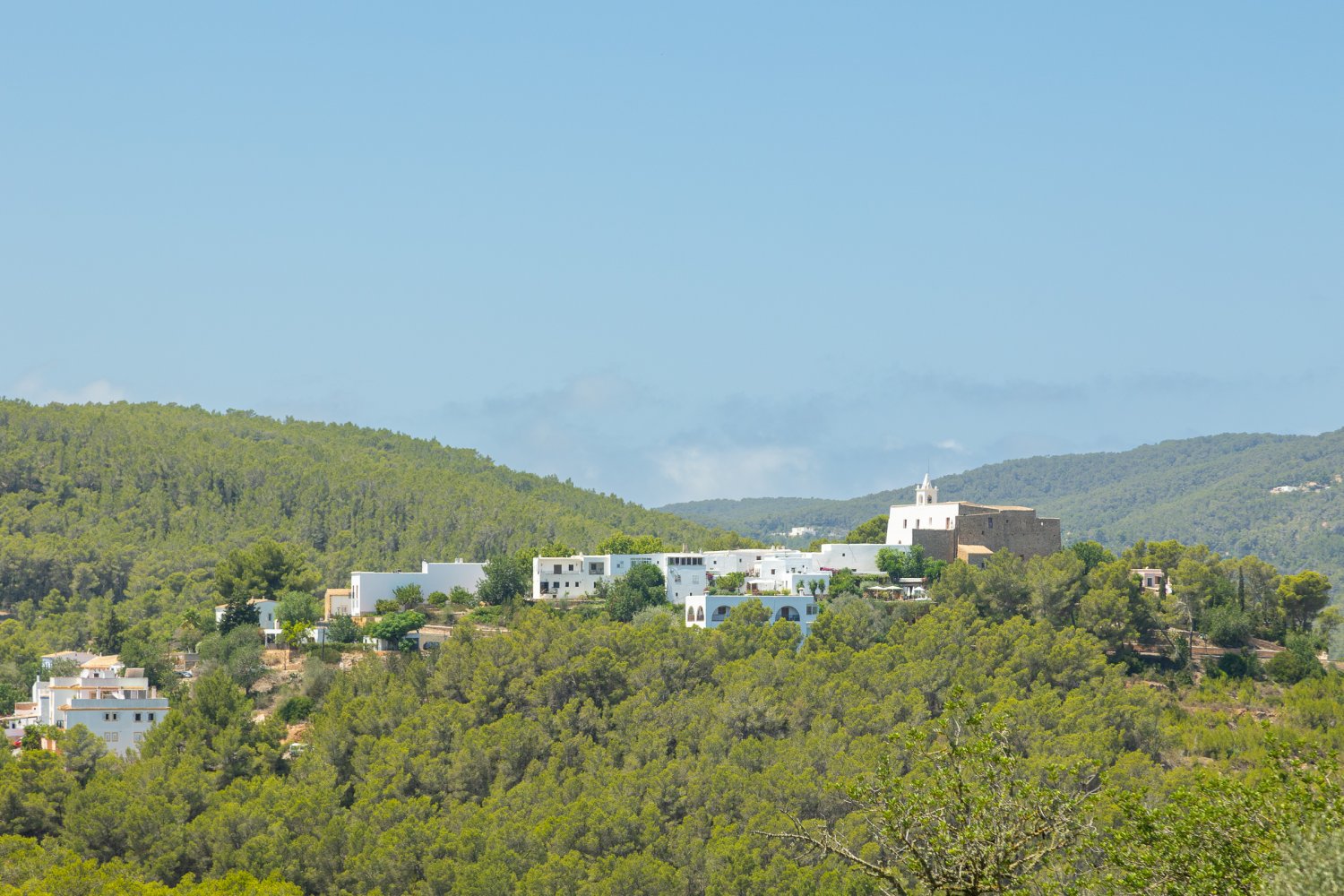
In the north of Ibiza, San Miguel (Sant Miquel in Catalan) offers a rather different take on the island. It is 18 kilometres from the capital of Ibiza, Eivissa, and can be easily reached by car or bus (Lines A8 & A9). The village sits inland on a low hill, crowned by one of Ibiza's most distinctive churches, while a short road downhill leads to Puerto San Miguel and its sheltered bay.
Together, they make up a compact destination that combines traditional Ibiza, a family-friendly beach resort and an increasingly cosmopolitan food, wellness and hospitality scene.
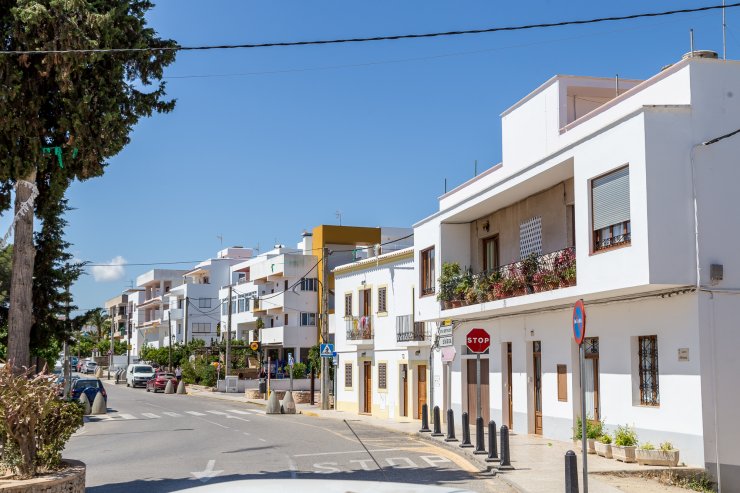
Once a sleepy rural village, San Miguel has become livelier in recent years without losing its connection to the surrounding countryside. The pace remains considerably slower than in Ibiza Town or the island's major resorts, but there is now a good choice of restaurants, rural hotels, retreats and wellness experiences in and around the village.
It is particularly appealing to visitors who want to be close to the sea while staying somewhere with a stronger sense of place.
The village
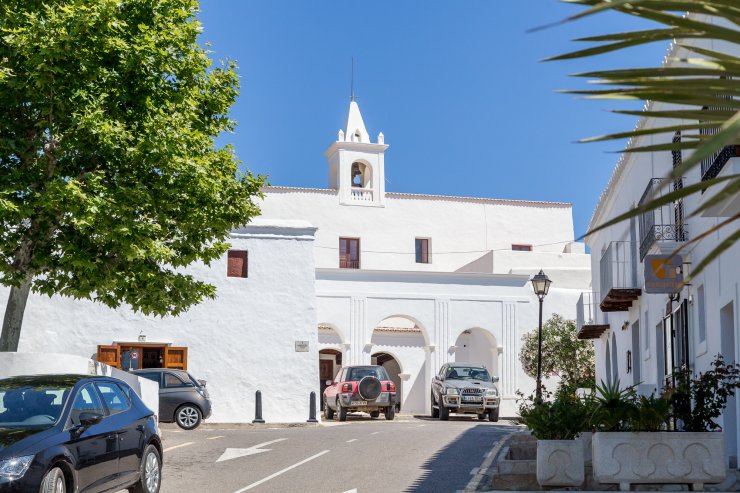
The first stop should be the church, perched on the Puig de Missa above the village. Unlike many of Ibiza's whitewashed churches, it is a fortified building, designed to serve both religious and defensive purposes at a time when pirate attacks were a genuine threat.
The present structure dates from the 16th century and was subsequently enlarged, with thick walls and a commanding position that allowed the settlement to be protected and watched from above. It is also the only church on Ibiza with a T-shaped floor plan, while its interior contains historic wall paintings and decorative details.
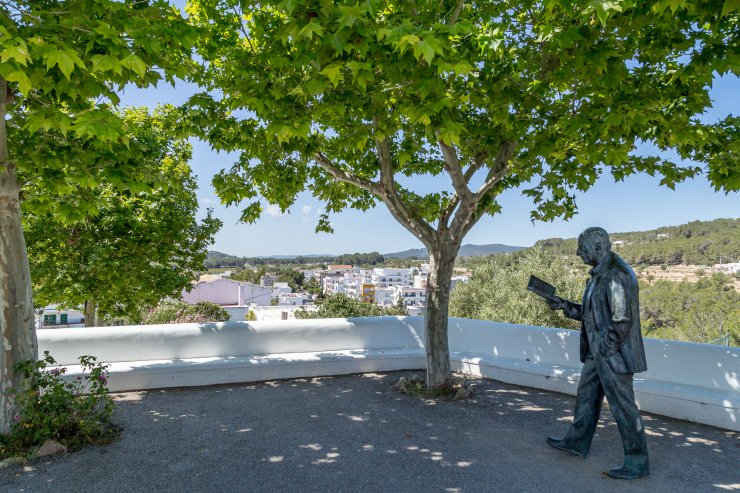
Standing in front of the church, you'll see the statue of Marià Villangómez (1913–2002), one of Ibiza’s most important poets and writers, who lived in San Miguel from 1946 to 1959. The surrounding countryside, woods, sea, and local people became recurring subjects in his work, often referred to as his “Balansat cycle”. His connection with the village is still commemorated by a statue beside the church, installed in 2005.
From his poem, Passeig a Balansat:
“Oh Balansat de vents i fonts pregones, / cinglés reptant una insistència d’ones / i camps oberts de feina i de saó!” (“Oh Balansat of winds and deep springs, cliffs shaped by the insistent waves, and open fields of work and fertility.”)
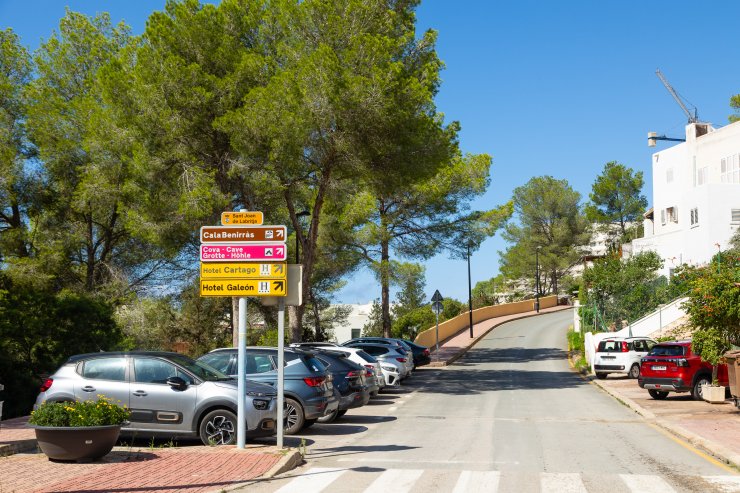
Tip: a road runs around the hill to the rear of the church. It’s well worth walking, as it is peaceful and affords wonderful sea and countryside views.
The church provides a natural starting point for exploring the village and the rural landscape beyond. San Miguel is surrounded by pine woods, farmland and small country roads, making the area particularly good for walking and cycling.
There is little need for a packed itinerary: part of the appeal is simply wandering through the village, stopping for lunch and heading into the countryside.
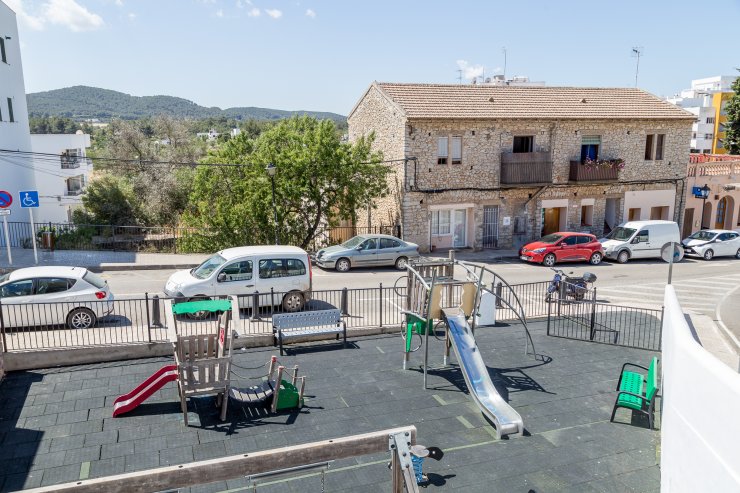
It's a child-friendly village with little traffic and a playground.
The village's patron saint fiestas, held around the feast of San Miguel in late September, add concerts, processions, traditional dancing and other community events to the calendar.
Down to the port
About 3.5 kilometres downhill, Puerto San Miguel feels quite different. Once a small fishing port, it is now a compact coastal resort centred on a roughly 100-metre beach backed by pine-covered cliffs.
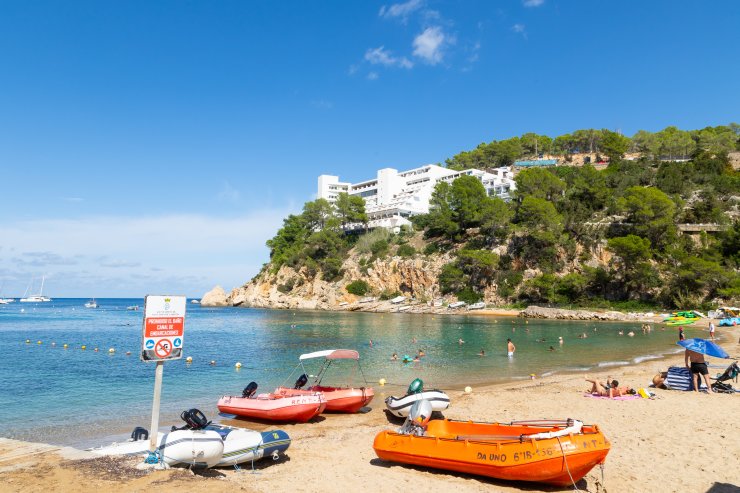
The bay is naturally sheltered, so the water is generally calm, and the gently sloping beach makes it popular with families.
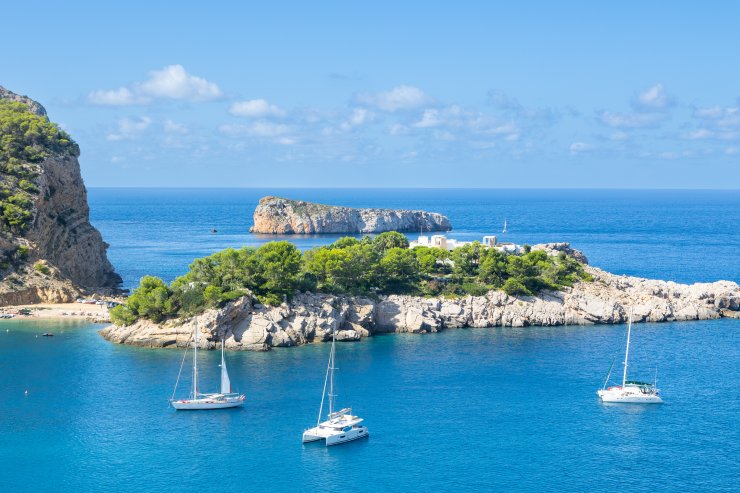
A small, privately owned islet, known as S'Illa des Bosc, lies just offshore.
There are plenty of reasons to linger beyond the beach. The port has restaurants, bars, shops and water-sports operators, with opportunities for hiring kayaks, SUP boards, small boats and exploring the coastline from the water.
Several smaller coves are within walking distance, including Caló des Moltons and Es Pas de s'Illa des Bosc, while Cala de Sa Ferradura provides another attractive spot for swimming and snorkelling.
Activities and attractions
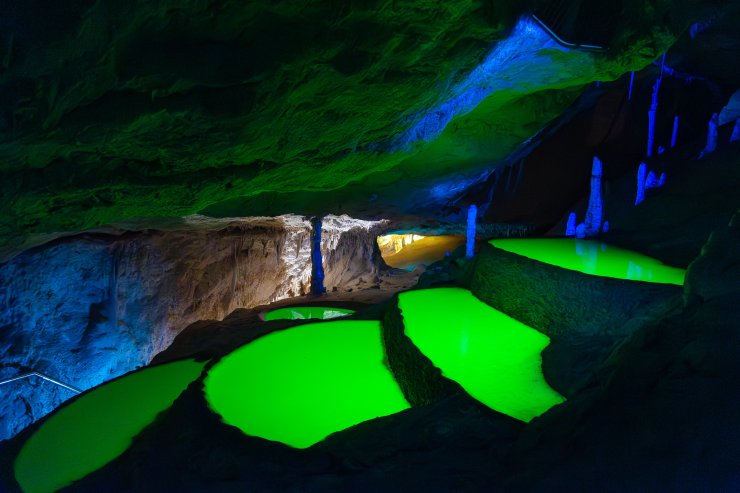
Although there are a smaller number of activities to do in the resort, it is blessed with one of the islands more fascinating.
One of the area's most unusual attractions is Can Marçà Caves, a former smuggling cave set into the cliffs above the port. The cave is more than 100,000 years old and can be visited on a guided tour, which leads through its subterranean chambers and explains its geological and human history.
Unlike many seasonal attractions, Can Marçà remains open during the winter months.
For walkers, the Torre de Balansat, better known as Torre des Molar, provides another worthwhile excursion. The 18th-century watchtower stands high on the cliffs between Puerto San Miguel and the Benirràs coast, with views across the Mediterranean and towards the small islands offshore.
The walk from the port takes roughly 30–40 minutes each way and combines sea views with the rugged landscape of northern Ibiza.
Food, wellness and places to stay
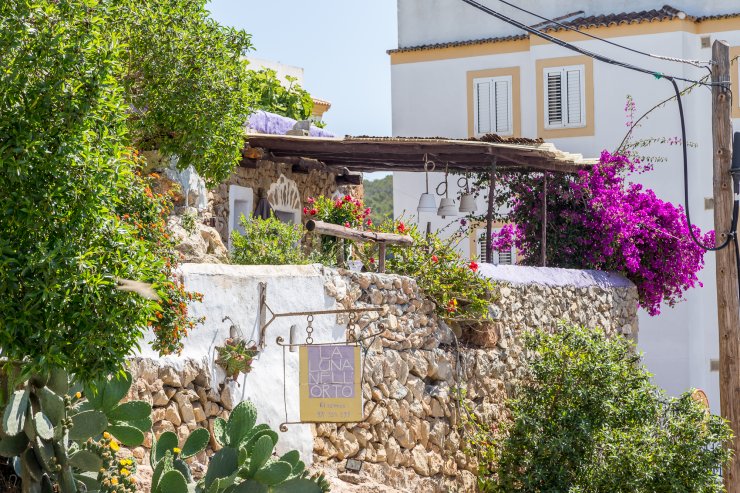
Food and a small but impressive restaurant scene is now one of San Miguel's strongest attractions. Italian, Thai, Mexican and contemporary Mediterranean restaurants such as La Luna Nell'Orto can be found in the village, ...
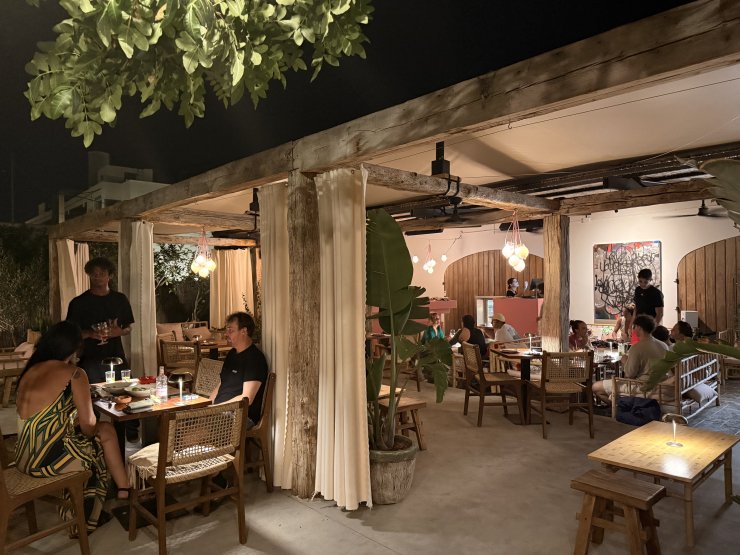
... as well as a trendy cocktail bar and restaurant, Mira Lounge, giving it a considerably more varied dining scene than its sleepy past might suggest.
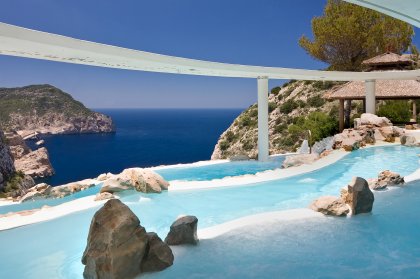
Wellness - in the form of a Thai massage centre and a Pilates studio - now features prominently. The wider area is also home to several rural and luxury properties offering spas, yoga, treatments and other ways to slow down, including Ibiza's most stunning cliffside hotel, Hacienda Na Xamena, and its Spa La Posidonia.
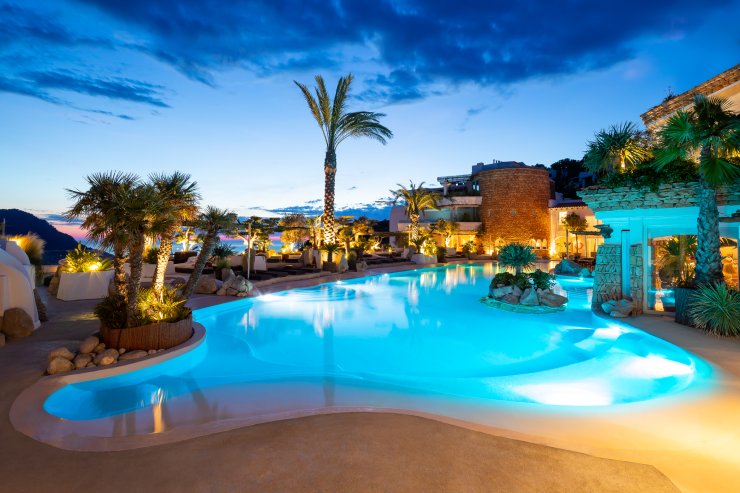
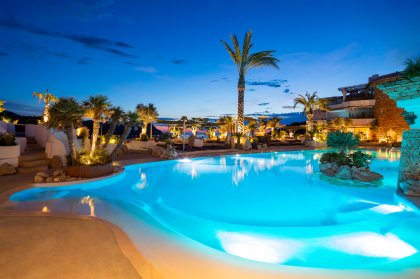
Accommodation options range from family-friendly beach resorts and apartments at Puerto San Miguel to rural hotels and high-end country properties inland. This makes the area particularly flexible: families can stay close to the beach, while couples and those seeking a quieter retreat can head into the countryside.
Beyond San Miguel
The surrounding area is one of the main reasons to choose San Miguel as a base.
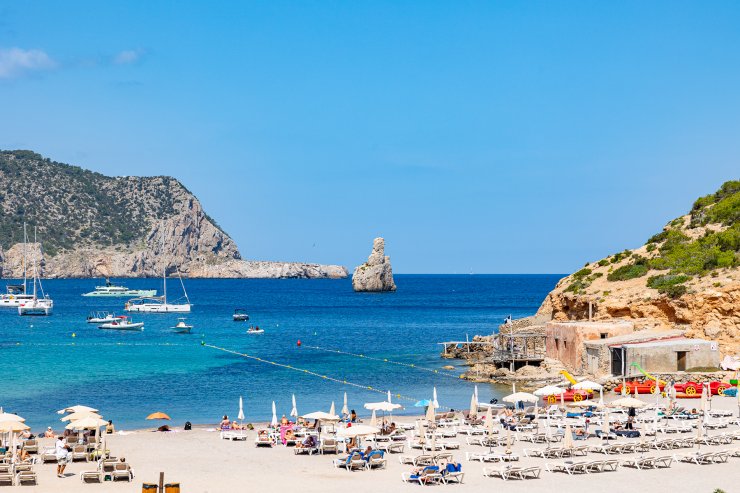
Benirràs beach is close by, with its beach, iconic 'Finger of God' rock, pine-covered hills and famous summer drumming tradition.
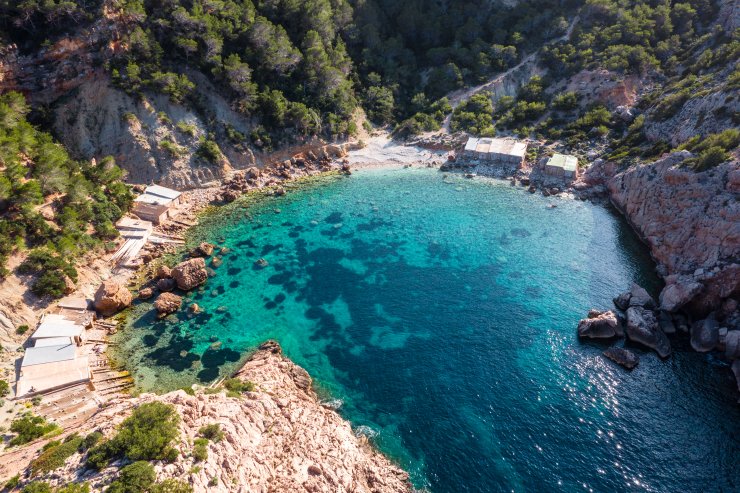
Meanwhile, the more remote Es Portitxol offers a glimpse of a wilder northern coastline, reached by a medium-difficulty hike through pine forest to a tiny natural harbour lined with traditional fishermen's huts.
Come summer, San Miguel and its port have enough restaurants, beaches and activities to keep visitors occupied, but without the intensity of Ibiza's main resorts. In winter, the atmosphere changes again. The port becomes exceptionally quiet, while the village retains more of its everyday local life.
That combination is perhaps San Miguel's greatest strength: a traditional northern village that has evolved into a more vibrant and cosmopolitan destination, while remaining close to the landscape, food and slower rhythms that make this corner of Ibiza distinctive.
To finish off, a local saying that bears witness to the importance of the autumn rains in the agrarian cycle:
“Si per Sant Miquel no plou, al pagès li entra el dol.” Rough translation: “If - on Sant Miquel - it doesn't rain, the farmer's bound to feel some pain.”
If you have hired a car, then consider following our recommended road trip of the northwest of Ibiza, which includes San Miguel among other beautiful spots.