

Formentera is a small island and is ideal for exploring by bike or e-bike. Alternatively, you can hire a car or a scooter; electric models are available here too.
Make sure to visit the picturesque villages - best in the morning or afternoon, as most shops in the traditional villages close during the traditional siesta, from around 14:00 to 17:00.
During this hottest part of the day, it’s best to take a break yourself at one of the island’s many beautiful beaches.
The following sights are of particular interest – you can easily visit them all one day.
The lighthouses of La Mola and Cap de Barbaria
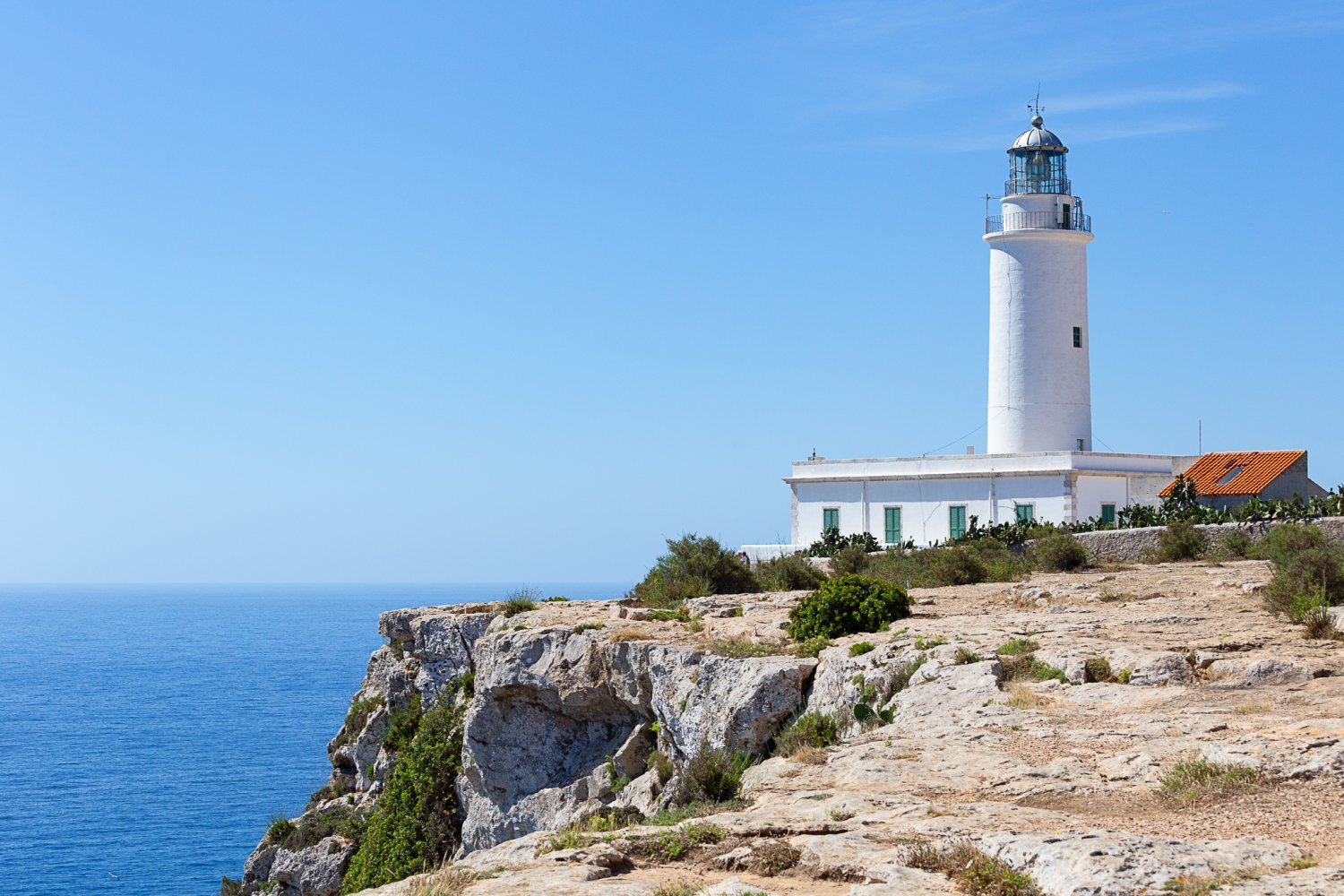
The lighthouse of La Mola is one of Formentera’s most impressive landmarks and stands high above a steep cliff at the eastern end of the island.
The journey there is an experience in itself; the road suddenly climbs sharply and demands quite an effort if you are cycling. At the top, spectacular views and a unique, wild landscape await.
La Mola Lighthouse also houses a small museum, which is open during the summer season and offers an insight into the island’s maritime history.
To see an amazing sunset plus views of Es Vedrà, the lighthouse of Cap de Barbaria in the south-west is a must-do spot.
During the summer season, access is restricted, and the lighthouse can only be reached on foot or by bike from the parking area. The narrow road leads through an arid, almost lunar landscape, creating a true sense of solitude.
From the lighthouse, it's just a short ten-minute walk east to the 18th-century defence tower of Torre des Garroveret.
Formentera Ethnographic Collection in San Francisco
A small museum that packs in plenty of interesting artefacts and information about how the people of Formentera once lived.
Displays include traditional clothing, agricultural tools, household utensils, and exhibits on historic island trades such as salt production and fishing.
Ca Na Costa megalithic graves near Es Pujols
Between Es Pujols and the inland lake of Estany Pudent in the north of Formentera lies one of the oldest prehistoric burial sites in the Balearic Islands, the megalithic graves of Ca Na Costa.
Here you will find a circular burial chamber made of large stone slabs, surrounded by concentric paving rings, dating back to around 2000 BCE.
Eight bodies were excavated here, along with ceramics and other artefacts.
The salt lakes of Estany des Peix and Estany Pudent
Just outside La Savina is the smaller of Formentera’s inland salt lagoons, Estany des Peix, a sheltered natural harbour where many small boats are moored.
Next to it, and stretching east from La Savina, is the larger lagoon of Estany Pudent, named after the natural sulphurous odours once associated with the area.
In summer, mosquito repellent can be useful here. Both lagoons are well worth a visit, wonderfully scenic, and excellent spots for photography.
Ses Salines salt flats
The Ses Salines salt flats lie just outside La Savina on the way to the beaches of Ses Illetes. A reminder of Formentera’s first major industry, salt production is no longer carried out these days.
The beautiful salt ponds, often tinged with shades of pink, are home to a wide variety of wild birds. Visitor and interpretation centres can be found in San Francisco and at Can Marroig near La Savina, making the area an ideal outing for nature lovers and families.
Read more...
For more things to do read also our extensive Formentera island guide.