Long before Ibiza became synonymous with electronic music, beach clubs and summer sunsets, the island had another powerful female presence at its heart. Tanit - or Tinnit, as her name appears in ancient inscriptions - was the great Punic goddess whose cult became deeply rooted in Ibiza after the Phoenicians established a settlement here in the 7th century BCE.
She is often described as a moon goddess, but Tanit's role was considerably broader. She was associated with fertility, regeneration and protection, and with the passage between life and death. Her worship was particularly important in the Punic world, and Ibiza has produced an unusually rich archaeological record of her cult.
At the ancient cemetery of Puig des Molins, for example, archaeologists have found numerous female terracotta figures interpreted as representations of Tanit.
For an island whose modern identity is so strongly associated with freedom, creativity, sensuality and nightlife, it is tempting to see something familiar in this ancient deity. But Tanit's story goes considerably deeper than the modern mythology sometimes suggests.
A goddess from the ancient Mediterranean
Tanit belonged to the religious world of the Phoenicians and, later, the Punic civilisation centred on Carthage in North Africa. She was worshipped across the western Mediterranean, where she was associated with the male god Baal and acquired a variety of roles connected with fertility, protection, regeneration and the afterlife.
Her connection with fertility is particularly significant. For an ancient island community dependent on crops, livestock and reliable sources of fresh water, fertility was not an abstract concept. It was fundamental to survival.
This helps explain why Tanit became such an important figure in Ibiza. Her worship was not simply imported and then forgotten. It became firmly embedded in Ebusus, as ancient Ibiza was known, leaving behind an extraordinary collection of figurines, votive objects and other archaeological evidence.
There is also a tantalisingly older story behind all this. Female deities associated with fertility, motherhood, nature and regeneration had been worshipped around the Mediterranean for millennia before the Punic period. Some interpretations have attempted to connect later goddesses such as Tanit with an ancient Mediterranean tradition of female or “Mother Goddess” worship, and even with the idea of a prehistoric matriarchal society.
It is an intriguing theory, but one that needs a little caution. Archaeology does not establish that the ancient Mediterranean was once universally matriarchal. Tanit can, however, be seen as part of a very long tradition in which female divine figures represented fertility, regeneration and the mysterious forces sustaining life.
In that sense, she belongs to a much older story than the Phoenician settlement of Ibiza.
Tanit's sacred cave
The most tangible connection between Tanit and Ibiza lies in the north of the island, at Cova des Culleram, near Cala de Sant Vicent.
The sanctuary was discovered in 1907 and subsequently proved to be one of the most important Punic religious sites in the western Mediterranean. It was in use approximately from the 5th to the 2nd century BCE and was dedicated to Tanit. More than 600 complete terracotta votive figures were recovered from the site, along with many fragments and other ritual objects.
These weren't simply decorative statues. They were ex-votos - objects offered to a deity as part of a religious ritual, often in connection with a request, thanksgiving or act of devotion.
The cave therefore gives us a rare glimpse of people actually practising their religion. Rather than merely finding evidence that Tanit was worshipped on Ibiza, archaeologists have found the remains of a place where ancient islanders came to address her. And there is an extraordinary piece of evidence to confirm exactly which goddess was being honoured.
In 1923, a local man discovered a small bronze plaque near the cave. Its Punic inscription refers to “our Lady, Tinnit, the Powerful”, providing direct evidence linking the sanctuary with Tanit. The plaque is now regarded as one of the most important pieces of evidence for understanding the site.
Suddenly, the mysterious cave has a voice.
Who was Tanit?
The strange thing about Tanit is that we don't possess a single definitive portrait of her.
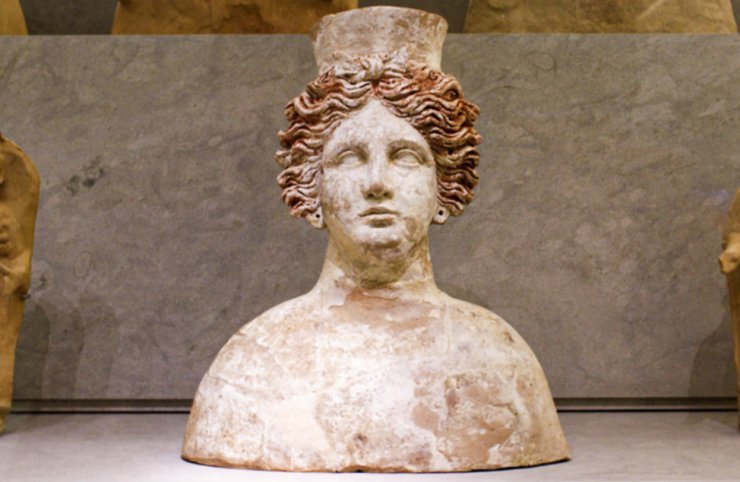
One of Ibiza's most famous ancient female figures is the Lady of Ibiza, a richly decorated terracotta figure dating from around the 4th or 3rd century BCE and discovered at Puig des Molins. She is often identified with Tanit, particularly because of the plant motifs covering her clothing and the symbolism of death and rebirth associated with the figure.
But even this identification isn't certain.
The National Archaeological Museum in Madrid explains that the figure could represent Tanit - the goddess of fertility and rebirth who received the dead into the afterlife - but another interpretation is that she represents a deceased woman herself, transformed into a deity who welcomes and protects her in the next world.
That ambiguity is part of the fascination. Ancient religion rarely provides the neat answers that modern visitors might expect.
Other terracottas found on Ibiza are more directly identified by archaeologists as Tanit. The MAEF collection, for example, includes female figures interpreted as Tanit in her role as a funerary deity, as well as a seated female figure probably representing the goddess.
The recurring imagery of flowers, wings, vegetation and female forms hints at a deity concerned not simply with bringing life into the world, but with renewal - the idea that death itself could be part of a larger cycle.
From goddess to symbol
Tanit's influence didn't disappear when the ancient Punic world passed into history. Her name has become woven into modern Ibiza, appearing on hotels, businesses, restaurants, souvenirs and countless references to the island's ancient past.
The archaeological legacy is particularly concentrated around Puig des Molins, the ancient cemetery of Ebusus. The Phoenicians established the city's necropolis here in the 7th century BCE, and it remained the burial ground of Ibiza's city throughout antiquity.
The association with death is important because it adds another dimension to Tanit's familiar reputation as a fertility goddess. She was not simply concerned with conception and abundance. Her symbolism also encompassed the transition from life to death and the possibility of rebirth.
Perhaps that is why her image has proved so remarkably persistent.
Tanit and the water of Ibiza
There is another connection that feels particularly appropriate on an island where water has always been precious.
Ancient fertility cults naturally carried associations with water, growth and the renewal of life, while wells and springs were essential to traditional Ibizan communities. Ibiza's rural landscape is dotted with ancient water sources, and traditional celebrations have long centred on wells and springs.
It would be going too far to claim that today's rituals around Ibiza's wells represent an unbroken continuation of Tanit's worship. There is no evidence for such a direct line.
But the symbolism is striking. An ancient goddess concerned with fertility and regeneration belongs to a world in which a reliable spring could mean the difference between prosperity and hardship. The island's water sources therefore provide an evocative backdrop for understanding why such a deity could have become so important here.
And then there is Es Vedrà...
There are two places on Ibiza that have become especially associated with Tanit in the popular imagination.
The first is Es Culleram, the genuine archaeological sanctuary in the north.
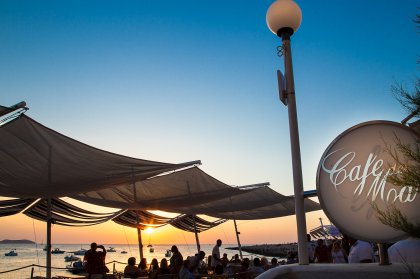
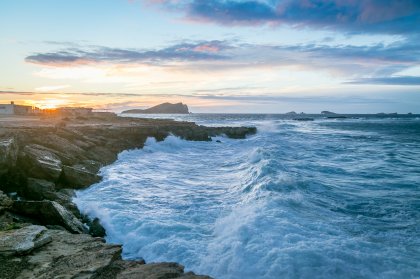
The second is the western coast, where visitors gather every evening to watch the sun sink towards the horizon, with the dramatic silhouette of the towering rocky outcrop of Es Vedrá offshore.
There is no need to pretend that Es Vedrà was an ancient Tanit sanctuary to appreciate the connection. The association belongs largely to modern Ibiza mythology, but it makes for an irresistible piece of symbolism.
As the sun disappears and the landscape turns from gold to violet, it is easy to imagine an ancient islander looking out across the same Mediterranean, contemplating the same cycles of light, darkness, life and death.
Tanit would certainly fit the scene.
Perhaps that is why she remains such a compelling figure in Ibiza today. She is not simply a relic of the island's Phoenician past, but a symbol onto which successive generations have projected ideas of fertility, femininity, creativity, sensuality, mystery and renewal.
More than two millennia after people came to her sanctuary at Es Culleram, Tanit's name is still everywhere.
And if Ibiza really does have a goddess, she has certainly proved remarkably difficult to forget.
Read more: History of Ibiza and Formentera and Ibiza's best sunset spots
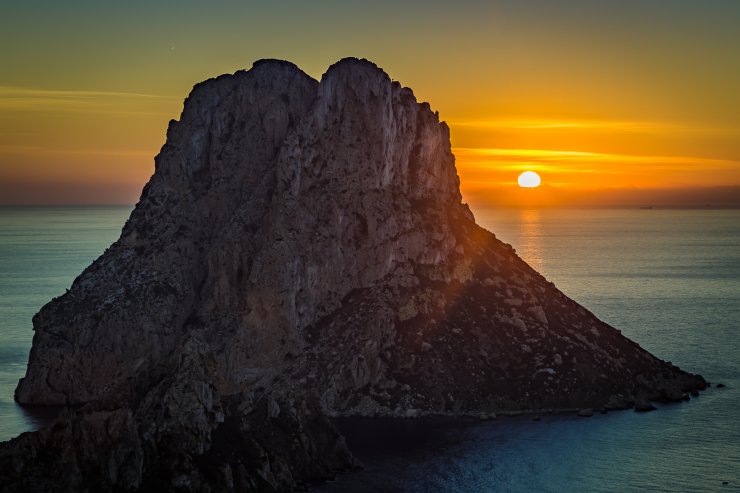
Hugely popular with sightseers, the latter is one of Ibiza's top attractions. So now you know a bit about her background, should you find yourself there, marvelling at the glorious colours of sunset and the imposing vista of the twin rocks, remember Tanit, Ibiza's female deity and, quite possibly, the original influencer behind Ibiza's world-famous dance and music scene.

Read more about the history of Ibiza and Formentera here. And if you, like us, adore the island's spectacular sunsets, check out our guide.
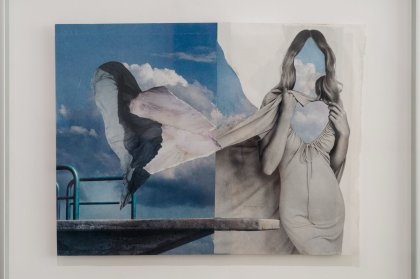
PHOTO CREDIT | Last image courtesy of Can Salia Hotel